
Cómo crear un liquidity pool para tu token de Ethereum (2026)
¿Quieres crear un liquidity pool para tu token de Ethereum en un exchange descentralizado (DEX)? Esta guía te ayudará a comenzar. Crear un liquidity pool significa habilitar el trading de tu token, y una vez creado el liquidity pool, cualquier persona en el mundo puede comprar y vender tu token.
Los principales exchanges descentralizados (DEX) en la red Ethereum incluyen Uniswap, PancakeSwap y SushiSwap, y puedes crear un liquidity pool en solo 5 pasos.
Creación de liquidity pool para tokens ERC-20: guía paso a paso
Para crear un liquidity pool para tu token de Ethereum, dirígete a la herramienta de creación de pools de liquidez de Ethereum, asegúrate de que Ethereum esté seleccionado y conecta tu wallet.
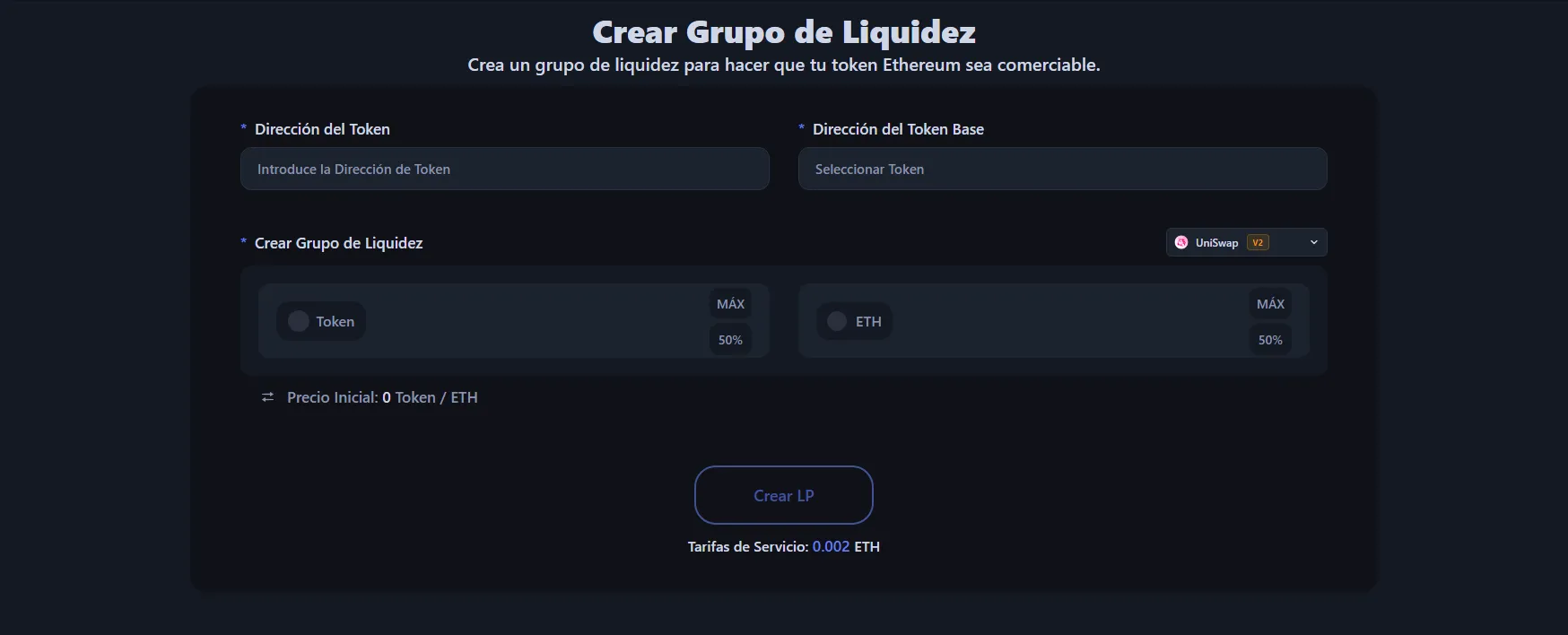
- Conecta tu wallet en la dApp de creación de pools de liquidez de Ethereum
- Introduce o selecciona la dirección del token para tu liquidity pool — este es tu token listo para salir al mercado.
- Elige el token de emparejamiento (ETH, USDT, USDC, etc.) — este determinará el valor de tu token.
- Selecciona el DEX (Uniswap, PancakeSwap o SushiSwap) y elige entre pool tipo V2 o V3
- Introduce la cantidad de tu token y del token de emparejamiento que añadirás como liquidez. Esto establecerá el precio inicial de tu token.
- Haz clic en "Crear LP" y aprueba la transacción.
Para una guía detallada sobre la creación de pools de liquidez para tokens ERC-20, consulta nuestro tutorial de creación de pools de liquidez en cadenas EVM.
En cuestión de segundos, tu liquidity pool estará creado. Podrás ver tu actividad de trading y gráficos en DexScreener o DexTools. El coste de crear un liquidity pool en Ethereum con Alphecca es de 0.002 ETH más menos de 0.0001 ETH en gas, sin comisiones ocultas.
Preguntas frecuentes
Aquí tienes las preguntas más comunes al crear un liquidity pool en Ethereum:
¿Por qué necesito crear un liquidity pool?
Sin un liquidity pool, tu token no puede ser intercambiado. Crear uno permite que cualquiera pueda comprar y vender tu token en un DEX. Además, una vez que tu pool esté activo, tu token aparecerá en plataformas como DexScreener y DexTools, exponiendo tu proyecto a potenciales inversores.
¿Cuánto cuesta crear un liquidity pool en Ethereum?
Con Alphecca, la tarifa del servicio es de 0.002 ETH, y las comisiones de gas suelen ser inferiores a 0.0001 ETH. No hay costes adicionales. Sin embargo, necesitarás proporcionar tus propios tokens y tokens de emparejamiento (ETH, USDT, etc.) para el pool. Dado que las comisiones de gas en la red principal de Ethereum fluctúan según la congestión de la red, te recomendamos crear tu pool en horas de menor actividad.
¿Cuál es la diferencia entre los pools de liquidez V2 y V3?
Los pools V2 distribuyen la liquidez de manera uniforme en todos los rangos de precio, siendo fáciles de configurar y gestionar. Los pools V3 te permiten concentrar la liquidez en un rango de precio específico para mayor eficiencia de capital, pero tu liquidez se desactiva si el precio sale de ese rango. V2 es ideal para principiantes, mientras que V3 es más adecuado para quienes pueden gestionar activamente sus posiciones.
¿Puedo crear múltiples pools de liquidez para un solo token?
Sí, puedes crear múltiples pools de liquidez para un mismo token. Además de pares con ETH, también puedes crear pares con USDT o USDC. Incluso puedes crear el mismo par en varios DEX como Uniswap, PancakeSwap y SushiSwap. Solo asegúrate de mantener precios consistentes en todos los pools ajustando las proporciones de liquidez.
¿Puedo operar con mi token inmediatamente después de crear el liquidity pool?
Sí, tu token estará disponible para operar instantáneamente una vez creado el liquidity pool. En cuanto la transacción se confirme en la blockchain, cualquier persona en el mundo podrá comprar y vender tu token. Puedes seguir los gráficos en tiempo real y el historial de operaciones en DexScreener, DexTools y GeckoTerminal.
¿Cuánta liquidez debería añadir?
No hay un requisito mínimo, pero añadir muy poca liquidez provoca un alto deslizamiento, dificultando las operaciones. Recomendamos comenzar con al menos $500-$1,000 de liquidez. Cuanto mayor sea la liquidez, mejor será la estabilidad del precio y más fluidas serán las operaciones de gran volumen, lo que genera confianza entre los inversores.
¿Aún no tienes un token ERC-20? Consulta nuestra guía para crear un token ERC-20 en Ethereum.
Conclusión
Ahora tienes todo lo que necesitas para crear un liquidity pool en Ethereum. Con Alphecca, puedes lanzar tu pool en minutos sin ningún conocimiento de programación. ¿Listo para llevar tu token al mercado? Empieza hoy mismo.